If you are receiving chemotherapy, you probably feel that your body is not up to exertion. You may have been told to save your strength or that exercise could be dangerous in your situation.
However, the direct answer is clear: medical science has shown that supervised exercise is not only safe during chemotherapy, but that this is the optimal time to start and one of the best ways to combat treatment toxicity.
The big myth: isn’t it better to wait until chemotherapy is over?
One of the most common beliefs is that it is better to start exercising once all cancer treatments have finished: chemotherapy, radiotherapy, immunotherapy, hormone therapy, and so on. But the science says the opposite.
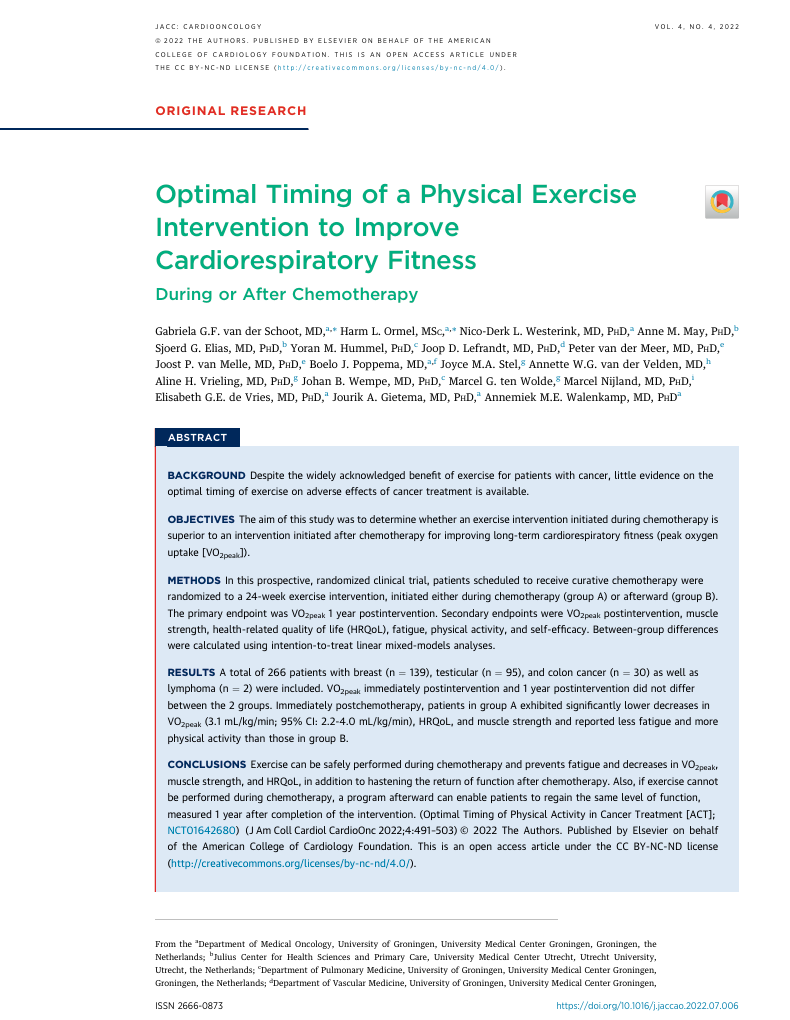
This 2022 study entitled Optimal Timing of a Physical Exercise Intervention to Improve Cardiorespiratory Fitness During or After Chemotherapy, by van der Schoot and colleagues, focuses precisely on when it is best to act.
Research on optimal intervention timing shows that preserving your cardiorespiratory fitness during chemotherapy is much smarter and more effective than allowing your body to deteriorate and then trying to regain your fitness months later.
The real benefits of not staying on the sofa
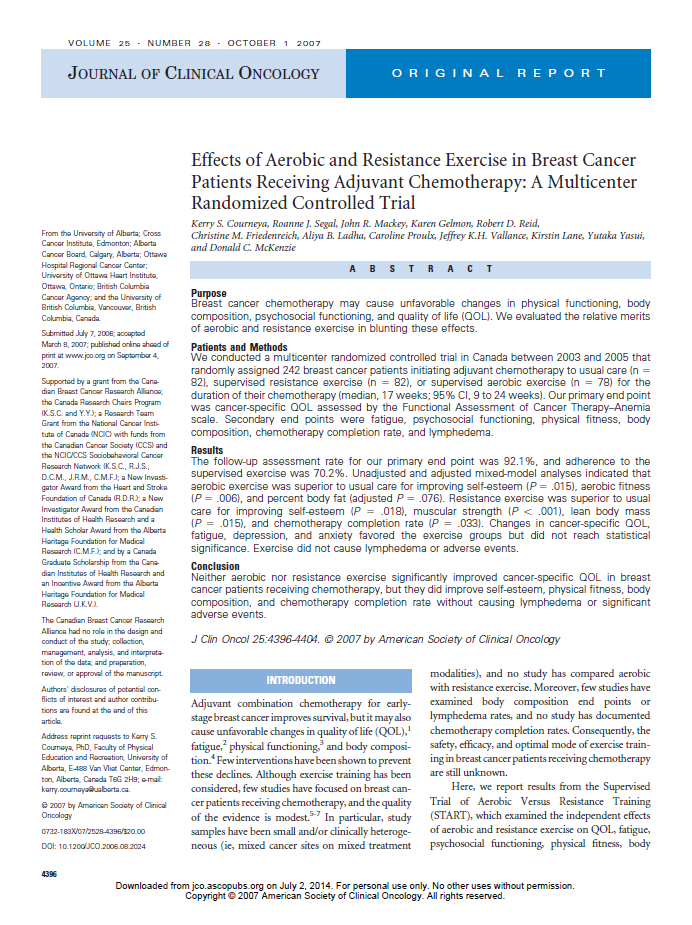
As well as protecting your heart and lungs in real time, exercise offers immediate advantages. The study led by Kerry Courneya in 2007 analysed 242 patients with breast cancer who were starting chemotherapy.
The results showed that exercise offers specific benefits depending on what you choose:
- Strength training: it is key to maintaining the muscle mass that chemotherapy often destroys.
- Aerobic exercise: walking or cycling can be fundamental to preserving vascular health, preventing physical capacity from plummeting and avoiding the excessive increase in body fat common at this stage.
- Emotional wellbeing: both types of exercise showed a significant improvement in patients’ self-esteem during the average 17 weeks of treatment.
An unexpected finding: exercise helps you complete your treatment
One of the most fascinating findings in Courneya’s study is that the patients who did strength training had a higher chemotherapy completion rate.
This suggests that exercise helps your body stay strong enough to avoid delaying doses or reducing the intensity of medical treatment because of weakness or toxicity. Movement helps chemotherapy do its job.
How can you train safely without exhausting your energy?
Knowing that exercise is safe and that the ideal time is now is a big step, but the reality is that it should not be approached just any way.
During chemotherapy, your white blood cell levels, red blood cell levels and, above all, your energy fluctuate enormously from one week to the next.
The secret to making exercise an ally rather than an obstacle is weekly dosing with daily supervision:
- Constant adjustment to your fatigue: your body will not respond in the same way the day after chemotherapy as it does during your rest week. Exercise must be adapted daily to your fatigue level; on some days, more intense training will be needed to gain strength, while on others the aim will simply be to maintain mobility through very gentle exercises.
- Specialist supervision: training during cancer requires specific knowledge of how medicines affect your heart, your bones or your bleeding risk. A professional will design safe movements that respect venous access devices, such as a port-a-cath, recent surgical scars or possible loss of sensation in the hands and feet, known as neuropathy.
The ultimate aim is not to break sporting records, but to use movement as a therapeutic tool to protect your body while you overcome the disease.
Sources

Written by
Miquel Galmés
Physiotherapist · Exercise and cancer-related pain
Physiotherapist with more than 7 years of hospital experience supporting people during and after cancer.
Do you have more questions?
We know this topic raises many questions: what type of exercise is safe, when to start, and what to do if you have fatigue, pain, metastases, anaemia or fear of moving. You can consult our Frequently Asked Questions to find answers to the most common questions.