Scientific evidence shows that, by adapting the dose to each patient, movement helps people tolerate cancer treatments better, drastically reduces side effects such as chronic fatigue, preserves muscle mass and activates the immune system. This is not about “moving a little”, but about using exercise as a shield of support.
If you have been diagnosed with cancer, those closest to you will probably say things like: “rest”, “don’t exert yourself” or “stay on the sofa to save your strength”. This is a normal reaction born of care, because treatments really are exhausting.
But here we encounter an important misunderstanding: resting does not always mean recovering better. In many cases, sustained complete rest can cause you to lose more strength, more muscle mass, more physical capacity and more independence.
Current science points in a different direction: adapted exercise can be one of the most important tools to help the body withstand the process better.
Exercise as the biological “polypill”
In medicine, there is a theoretical concept called the polypill: a single imaginary medicine that would treat many conditions and protect several organs at once. In real life, science has shown that the closest thing to that polypill is physical exercise. When you move, you work all your muscles, your heart, your blood vessels, your nervous system, your metabolism and your immune system at the same time.
Unlike a conventional medicine with just one target, adapted movement generates a cascade of simultaneous benefits throughout your body:
- Cardiovascular protection: it strengthens the heart and blood vessels against the cardiotoxicity of treatments such as chemotherapy.
- Immune stimulation: it mobilises the immune system so that the cells responsible for internal surveillance remain active and effective.
- Modulation of inflammation: it helps reduce chronic low-grade inflammation, altering the biological conditions in which the disease develops.
What science says: the study that changed the rules
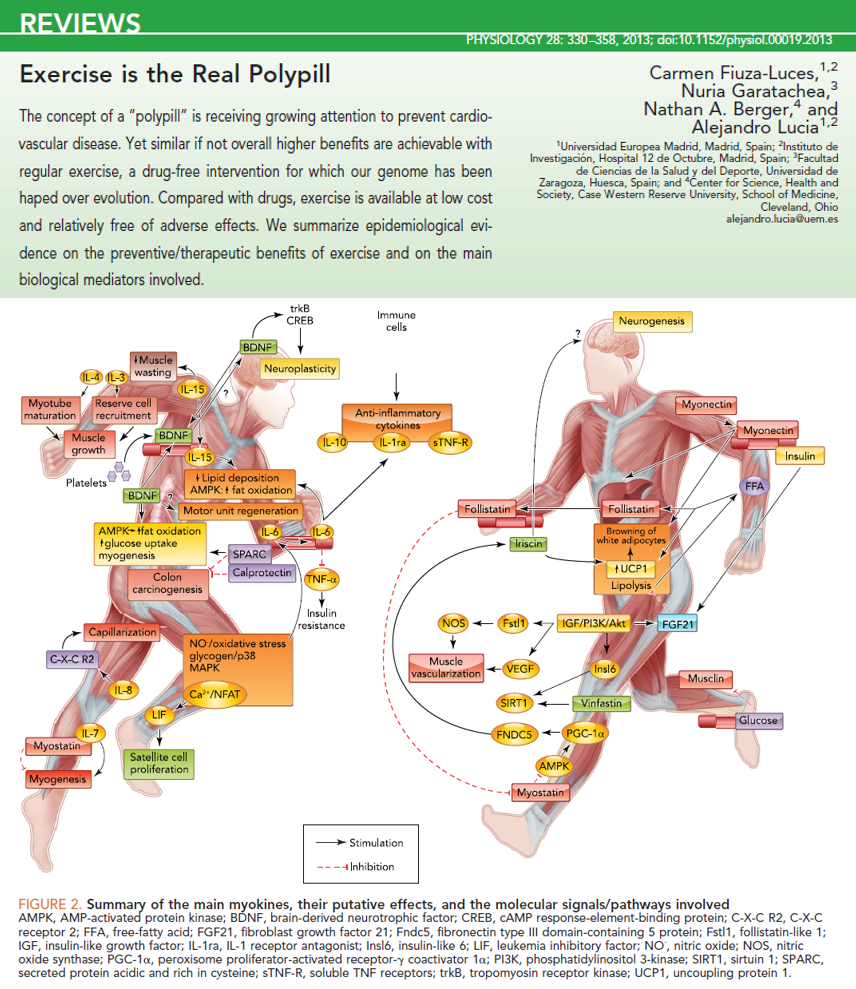
In 2013, a prestigious review published by leading Spanish researchers such as Fiuza-Luces and Alejandro Lucía, entitled “Exercise is the Real Polypill”, changed the rules of the game in modern oncology.
This study analysed how exercise affects the body at a molecular level and reached 3 vital conclusions:
- It is an evolutionary stimulus: our genes have evolved over thousands of years expecting movement in order to function properly. Stopping movement disrupts our biological balance.
- It acts through myokines: when muscles contract against appropriate resistance, they release substances called myokines. These chemical messengers travel through the blood, helping regulate metabolism, slow muscle deterioration and improve the body’s systemic response.
- It adds no toxicity: unlike necessary pharmacological interventions, properly dosed physical exercise does not overload your organs, but protects them and raises their tolerance threshold for side effects.
“Exercise is the pill that best stimulates the expression of our genes. What is unnatural is NOT moving”.
Alejandro LucíaHow can I “take” this medicine if I have no strength?
Telling a patient with cancer to “exercise” is as reckless as opening a cupboard full of pills and saying “take medicines”. Physical exercise is a powerful intervention and therefore requires a prescription, progression and precise dosing.
In our Empenta Programme, we adjust that dose to your situation:
- If you have severe fatigue, the aim may be to move without exhausting yourself.
- If you have lost strength, we prioritise simple exercises to regain muscle mass.
- If you have pain or limited mobility, we look for safe movements.
- If you are undergoing chemotherapy, we adapt the intensity to how your body responds each week.
This is not about exercising for its own sake. It is about using movement to preserve strength and endurance, tolerate treatment better and regain confidence in your body.
Remember that exercise does not compete with medical oncology; it enhances it.
Sources

Written by
Jaume Sansó
Physiotherapist · Exercise and cancer
Physiotherapist with more than 7 years of hospital experience supporting people during and after cancer.
Do you have more questions?
We know this topic raises many questions: what type of exercise is safe, when to start, and what to do if you have fatigue, pain, metastases, anaemia or fear of moving. You can consult our Frequently Asked Questions to find answers to the most common questions.